Anion Gap Calculator for Blood Test Reading
What Is the Anion Gap?
The anion gap is a derived value that helps medical professionals assess electrolytes and check acid-base balance. It is derived from common blood test components, especially sodium, chloride, and bicarbonate. Because routine chemistry panels do not measure every charged particle in the blood, the anion gap reflects the difference between measured cations and measured anions, giving insight into unmeasured anions in the blood.
This makes the anion gap a valuable diagnostic tool in blood test interpretation, particularly when evaluating an electrolyte imbalance or an acid-base disorder. In practical terms, a change in the anion gap may point toward a hidden metabolic process that is not obvious from the test result alone. That is why it is often used as part of laboratory interpretation during a metabolic acidosis workup.
The value is typically reviewed alongside the rest of the serum electrolytes and broader blood chemistry. Although it is a calculated number, it can offer meaningful clinical significance when interpreted correctly. A normal-looking panel may still hide a disorder if the anion gap is abnormal, which is why clinicians pay attention to the overall pattern rather than just a single test result.
How this Anion Gap Calculator Operates
An anion gap calculator relies on a straightforward formula and your lab values to estimate the anion gap fast. Rather than calculating it manually, you input the measured concentration of sodium, chloride, and bicarbonate, and the medical calculator produces the result in seconds. This helps for rapid review of an electrolyte panel or basic metabolic panel.
The calculator is designed to help users calculate anion gap without needing to remember the exact math each time. It is especially useful when reviewing a serum bicarbonate value in context with the chloride level and overall normal electrolytes. The resulting anion gap value can support clinical thinking about whether the body is keeping or excreting acid, or whether there may be excess unmeasured anions.
Because the calculator relies on routine lab measurements, it is a practical way to move from raw data to interpretation. Nevertheless, like any medical calculator, it should be viewed as a support tool rather than a replacement for clinical judgment. The same number can mean different things depending on the patient’s context, the reference range, and whether the value is corrected for albumin.
Anion Gap Formula and Calculation Steps
The standard anion gap formula reads:
Na - (Cl + HCO3)
Where Na represents sodium, Cl represents chloride, and HCO3 stands for bicarbonate. This straightforward calculation helps estimate the distance between measured positive and negative substances in the blood. The goal is to determine what is not directly measured, which can offer important clues about blood chemistry.
To calculate it step by step:
- Identify the sodium value in the lab report.
- Find the chloride value.
- Locate the bicarbonate or total CO2 value, depending on the report.
- Sum chloride and bicarbonate together.
- Subtract that total from sodium.
For instance, if Na is 140, Cl is 102, and HCO3 is 24, the calculation is 140 - (102 + 24) = 14. This result is the anion gap. That same approach is what the anion gap calculator performs automatically, helping users avoid arithmetic errors and speeding up laboratory interpretation.
In some settings, a corrected anion gap may be considered if albumin is low. As albumin is a major unmeasured anion, low levels can make the gap look deceptively low or normal. For this reason, a calculator that supports albumin adjustment can add value in a more complete metabolic acidosis workup.
Why a High Anion Gap Suggests
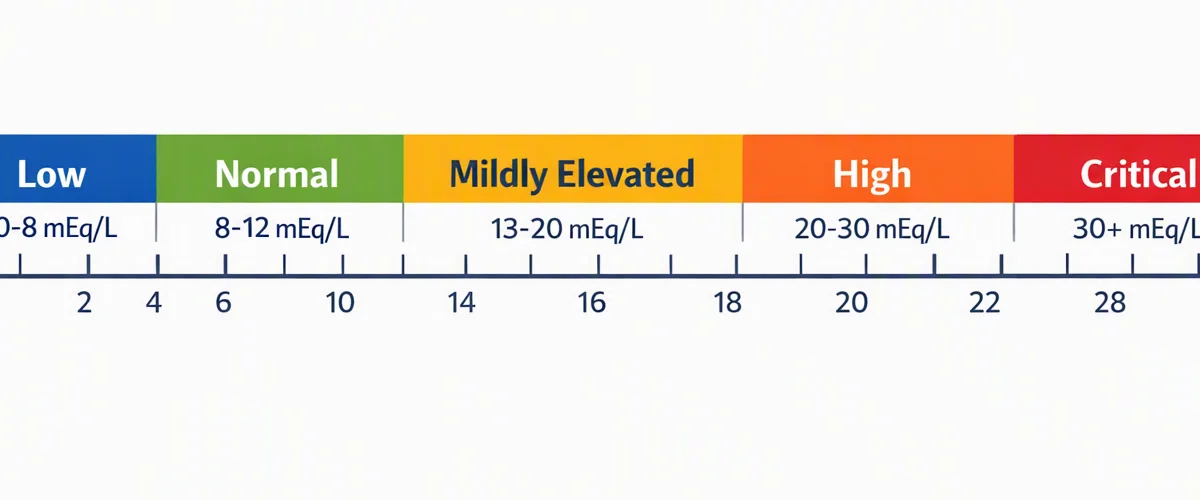
A high anion gap typically suggests that more acids are present in the blood. It is often associated with metabolic acidosis, where the body either generates too much acid, does not manage to clear acid effectively, or depletes bicarbonate in a way that shifts the balance. In this setting, the anion gap helps determine whether the acidosis is related to hidden acids.
Two classic causes are elevated lactate and ketosis-related acidosis. Lactic acidosis may occur when tissues do not receive enough oxygen or when there is a different mechanism driving lactate buildup. Ketoacidosis can happen when the body breaks down fat rapidly and produces ketones that contribute to the acid load. In both cases, the elevated anion gap reading can be an useful clue.
A high gap can also be seen with impaired kidney function, where the kidneys cannot remove acids efficiently. Other toxic substances may also raise the gap by introducing acids or acid-like substances into the system. Since many conditions can produce the same pattern, the anion gap should always be interpreted with the rest of the clinical picture and other lab findings.
In practice, a high gap is not a diagnosis by itself. It is a signal to look further. That may include checking the patient’s symptoms, reviewing the bicarbonate level, and determining whether there is a broader acid-base issue. The clinical significance lies in what the elevated value helps uncover.
What a Low Anion Gap Means
A low anion gap is uncommon, but it can still be significant. A common cause is low albumin, since albumin contributes substantially to the pool of unmeasured negative charges. When albumin drops, the calculated gap may fall even if the underlying chemistry is otherwise unchanged. In this case, an albumin-corrected anion gap may be more useful.
Another notable cause is multiple myeloma, a condition in which abnormal proteins can affect the electrical balance seen in blood chemistry. In some cases, these proteins may lower the measured gap or affect how the numbers are interpreted. This is why the anion gap is not only about acid-base disorders; it can also point toward protein-linked changes in the bloodstream.
Lab error is also an essential consideration. A low value can result from specimen issues, measurement variation, or problems with the reported lab values. Because of this, a surprising result should be reviewed closely and, when needed, repeated. The anion gap is a helpful clue, but it should not be treated as conclusive without context.
When a low result appears, checking the full electrolyte panel and reviewing serum electrolytes together can help determine whether the pattern reflects a real issue or simply an artifact. The result may also need to be viewed alongside the patient’s overall condition and any known electrolyte imbalance.
Normal Anion Gap Range and Reference Ranges
The expected range for the anion gap depends on the lab and the testing method used. This is why the most reliable guide is the lab’s own reference limits and reference values. Various instruments and result methods can shift the expected range, so a number that is normal in one setting may be borderline in another.
In general, the anion gap is interpreted against the specific lab report, not as one universal number. This also applies when reviewing a metabolic panel or a broader electrolyte panel. Clinicians often pay attention to patterns and the overall blood chemistry rather than a single isolated result.
If albumin is low, the apparent gap may diminish the true acid burden. In that situation, an albumin adjusted anion gap can better reflect the clinical picture. This is particularly important in patients with chronic illness, malnutrition, or inflammatory conditions where albumin may be reduced. Correcting for albumin helps promote more accurate result interpretation.
Because the normal range varies, the best approach is to compare the measured result with the lab’s own range and interpret it in context. The calculator can quickly provide the number, but the reference interval is what helps determine whether the value is low, normal, or high.
Typical Causes of Atypical Anion Gap Values
Atypical findings often suggest a shift in acid production, acid elimination, or the distribution of measured and unmeasured ions. One of the most common causes of a high gap is kidney failure, because reduced kidney function limits the body’s ability to clear acids and maintain stable serum chemistry. This can contribute to metabolic acidosis and a increasing gap.
Toxins are a further important cause. Certain toxic exposures can produce a high gap by introducing acids or interfering with normal metabolism. Salicylates are a classic example and may produce complicated acid-base changes that affect the anion gap. In such cases, the calculator is only the first step; further testing and history are crucial.
Diarrhea often causes a different pattern. It can lead to bicarbonate loss and may be associated with a normal gap or non-gap metabolic acidosis, depending on the situation. Even when the gap is not high, the electrolyte pattern can still signal an acid-base problem. That is why the anion gap is best used as part of a larger diagnostic framework rather than in isolation.
Other abnormalities may arise from changes in albumin, unexpected laboratory results, or conditions such as multiple myeloma. In every case, the calculator helps arrange the data, but the cause must be determined by the overall clinical picture and related testing.
How to Interpret Results With Other Blood Tests
The anion gap gets more useful when assessed with additional blood https://anion-gap-checker101.scriblorax.com/posts/anion-gap-calculator-for-children-how-to-interpret-results tests. One of the most important is the arterial blood gas, which gives direct information about pH, oxygenation, and acid-base status. If the pH is low and the anion gap is elevated, that reinforces the case for a high-gap metabolic acidosis. If the pH is normal, the situation may be more complex.
The bicarbonate level is also central to interpretation. A low bicarbonate often supports the presence of acidosis, and the direction of change helps determine whether the issue is likely metabolic or related to compensation. The anion gap calculator uses bicarbonate directly, so the number is tightly linked to the broader acid-base pattern.
In some scenarios, the osmolar gap is also important. This can help identify certain toxic alcohol exposures or other causes of unexplained illness when the anion gap is elevated. Together, the anion gap and osmolar gap can support a more complete evaluation of suspected toxins or unexplained metabolic derangement.
Putting these tests together helps create a clearer picture of the patient’s status. The anion gap is not a standalone answer; it is a piece of the full laboratory interpretation. When combined with blood gas data, bicarbonate trends, and other chemistry results, it becomes a practical part of an overall blood test interpretation.
Anion Gap Calculator FAQ
What is an anion gap calculator used for?
An anion gap calculator is used to quickly estimate the anion gap from common lab values so you can interpret an electrolyte pattern more efficiently. It helps with blood test interpretation, especially when reviewing a basic metabolic panel or electrolyte panel. Clinically, it supports evaluation of acid-base balance and may help identify a hidden metabolic acidosis.
How can you determine the anion gap from sodium, chloride, and bicarbonate?
The typical anion gap formula is Na - (Cl + HCO3). Start with the sodium value, include chloride and bicarbonate, and deduct that total from sodium. This is the same anion gap calculation used by a calculator, and it is commonly used in laboratory interpretation of serum electrolytes and blood chemistry.
What is viewed as a normal anion gap?
The normal range depends on the laboratory’s reference interval and reporting method. Because laboratory reference values change, it is best to compare the result to the range printed on the report. If albumin is low, an albumin-corrected anion gap may provide a more accurate picture than the uncorrected result.
What might a high anion gap indicate?
A high anion gap often points to excess acid in the blood and is commonly associated with metabolic acidosis. Frequent causes include lactic acidosis, ketoacidosis, kidney failure, and certain toxins, including salicylates. It is a useful clue, but it should always be interpreted with the rest of the clinical picture.
Does albumin affect the anion gap result?
Yes. Albumin is one of the main unmeasured anions, so low albumin can lower the measured gap. That is why a corrected anion gap or albumin-corrected anion gap may be needed in some cases. If the result seems unexpected, it is also wise to consider lab error and review the full electrolyte panel before making conclusions.